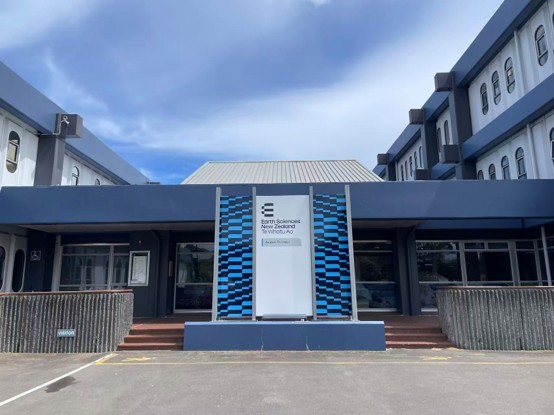
From 4–5 November 2026, IRDR's Executive Director Prof. Saini Yang, accompanied by Science Officer Ms. Fang Lian, visited Earth Sciences New Zealand (ESNZ) in Wellington. The visit marked a significant step in strengthening collaboration between IRDR and New Zealand's disaster risk reduction community and underscored the transition of the IRDR National Committee New Zealand to the Natural Hazards and Resilience Platform (NHRP).
Hosted by ESNZ's Risk Engineering Team, the visit brought together IRDR's representatives; the IRDR ICoE in Community Resilience (IRDR ICoE-CR), hosted by the Joint Centre for Disaster Research (JCDR) at Massey University; the ESNZ Risk Engineering Team; and the NHRP. The agenda featured roundtable introductions, institutional overviews, and in-depth discussions on shared priorities in hazard and risk science, resilience, and disaster risk management.
Understanding ESNZ and Its Society & Infrastructure Science
Established on 1 July 2025 through the merger of GNS Science and the National Institute of Water and Atmospheric Research (NIWA), ESNZ brings together over 1,500 staff across six significant science areas: geological hazards, weather and climate hazards, energy, land and freshwater, climate and weather, and oceans. IRDR's representatives learned about ESNZ's six science missions and 20 flagship projects, its nationwide monitoring network, and its growing international partnerships across the Pacific and Antarctica.
The visit also provided an opportunity to engage with ESNZ's Society & Infrastructure science capability, which comprises five teams working at the applied end of hazard and risk science: Hazard & Risk Social Science, Environmental Social Science, Planning & Policy, Risk Science, and Risk Engineering. Presentations highlighted ESNZ's multi-hazard risk and resilience work, the RiskScape risk analysis framework, and selected international projects, including the Luganville Multi-Hazard Disaster Risk Assessment, the Viet Nam–New Zealand Dam Safety Project, the Pacific Risk Tool for Resilience (PARTneR), and post-event responses to the 2018 Palu and 2024 Port Vila earthquakes.
NHRP to Continue as IRDR National Committee
A key outcome of the visit was confirmation that the Natural Hazards and Resilience Platform of New Zealand will continue the role of the IRDR National Committee in New Zealand.
The NHRP is a multi-institutional, collaborative research programme with a mission to accelerate Aotearoa New Zealand's resilience to natural hazards. Funded for seven years by the Ministry of Business, Innovation and Employment (MBIE), the platform mobilises scientists, resources, agencies, and communities from around the country to innovate collectively and address the significant exposure of New Zealand's communities, homes, and infrastructure to natural hazards and a changing climate. By fostering collaborative research informed by real-world needs, the NHRP aims to provide new knowledge and tools to strengthen resilience across the nation.
Prof. Yang welcomed this development, noting that the NHRP is well positioned to carry forward the National Committee's mission and to deepen engagement with IRDR's global network.
Looking Ahead
IRDR extends its sincere thanks to ESNZ, especially the Risk Engineering Team and the Natural Hazards and Resilience Platform, for their warm hospitality and productive exchanges. IRDR will prepare an invitation letter for the 2027 Asia-Pacific Science, Technology and Innovation Conference on Disaster Risk Reduction (APSTCDRR) meeting in Sendai, Japan, further cementing the partnership.
The IRDR representatives also toured the National Geohazards Monitoring Centre (NGMC), gaining first-hand insight into New Zealand's 24/7 geohazard monitoring and response capabilities.
We look forward to working together in the near future to advance integrated disaster risk reduction in New Zealand, the Pacific, and beyond.